Language
Real business is closed in Hebrew. Through intermediaries you lose nuance, you lose time and you lose negotiating position. On our team Hebrew is a working language, not a translation service we hire.
Specialisation
It is the market we know best and one of the least well served by Spanish companies. Not for lack of opportunity, but because it presents two entry barriers most exporters do not know how to cross.

Real business is closed in Hebrew. Through intermediaries you lose nuance, you lose time and you lose negotiating position. On our team Hebrew is a working language, not a translation service we hire.
In food, without the certificate there is no access to the channel. It is a process that touches ingredients, suppliers, machinery and plant procedures, and it is best addressed before you sit down with any buyer, not after.
It is closer to a production project than to an administrative formality. In broad terms, the path looks like this:
Review of the full formulation and the origin of every ingredient, including additives and processing aids.
Verification of the suppliers of those ingredients, who must in turn be able to evidence their own status.
Analysis of the production line: what else runs on that machinery and what cleaning protocols apply between batches.
Plant audit by the certifying agency and implementation of the procedures it determines.
Issue of the certificate and periodic renewal.
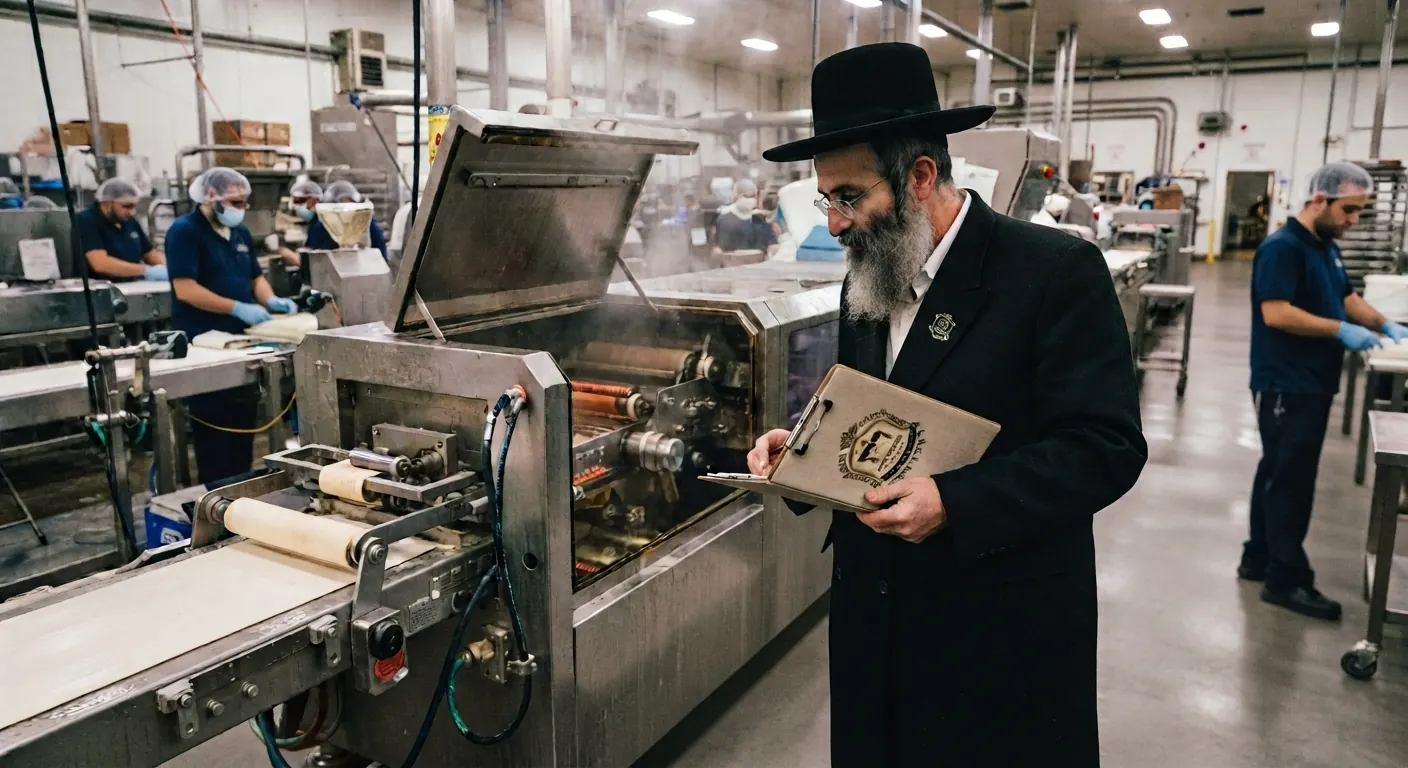
Our role is to prepare you for that audit, to act as the bridge with the certifying agency, and to make sure you do not discover a formulation problem when you already have an order committed.
With the technical sheet and the ingredient list we can give you a first read on kosher viability and market fit.